Sleep apnea and Your Teeth: What Happens to Your Mouth While You Sleep?
Introduction: The Connection You Didn’t Expect
Sleep apnea and teeth might seem like they have nothing to do with each other. One is a breathing disorder. The other is, well, your smile. Yet dentists are often the first professionals to spot the warning signs of this condition, long before a sleep specialist ever gets involved. Worn enamel, a scalloped tongue, and unexplained jaw pain can all be quiet clues that something is disrupting your breathing at night.At VIN SMILES Advanced Dentistry, we regularly see patients whose mouths are telling a story their sleep hasn’t caught up to yet. In this post, we’ll walk through exactly what happens inside your mouth during a night of disrupted breathing, and why catching these signs early matters for far more than just your smile.What Is Sleep Apnea, Exactly?
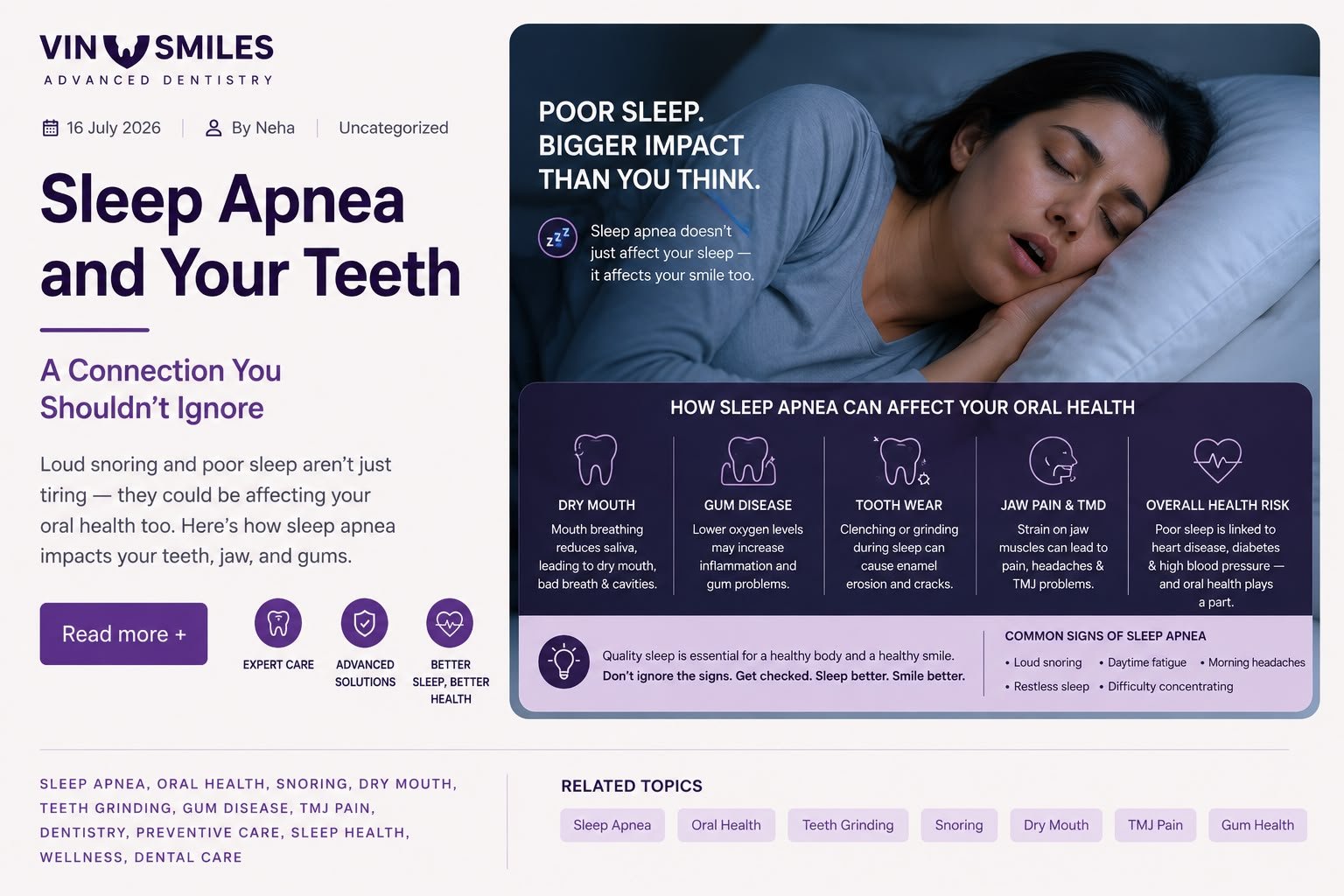
Obstructive sleep apnea (OSA) happens when the muscles in your throat relax too much during sleep, repeatedly narrowing or blocking your airway. Each blockage causes a brief pause in breathing, sometimes dozens or hundreds of times a night. Your body reacts by briefly waking you, often without you even realizing it, just enough to reopen the airway and gasp for air.The result is fragmented, poor-quality sleep. It also triggers a cascade of physical stress responses that reach far beyond fatigue, including several that show up directly in your mouth.How Sleep Apnea and Teeth Are Connected While You Sleep
1. Teeth Grinding and Clenching (Bruxism)
As your airway narrows, your jaw and facial muscles often engage involuntarily in an effort to reopen it. This frequently shows up as bruxism — grinding or clenching your teeth during sleep. Over time, this can flatten your teeth, cause chipping, and leave you with heightened sensitivity or even cracked restorations.2. Dry Mouth from Nighttime Mouth Breathing
A blocked airway often forces you to breathe through your mouth instead of your nose. This dries out your saliva, which normally plays a critical role in washing away bacteria and neutralizing acids. Less saliva means more opportunity for cavities, bad breath, and bacterial buildup to take hold.3. Gum Disease and Inflammation
Reduced saliva combined with the systemic inflammation associated with disrupted breathing creates ideal conditions for periodontal disease. This is one of the clearest links between sleep apnea and teeth health. A literature review published on PMC found that obstructive sleep apnea correlates with elevated rates of gum disease, alongside bruxism, dry mouth, and TMJ disorders. Left untreated, this inflammation can progress to gum recession and, eventually, tooth loss.4. TMJ Pain and Jaw Tension
Chronic clenching places ongoing strain on the temporomandibular joint, the hinge connecting your jaw to your skull. This can result in morning headaches, jaw soreness, and clicking or popping when you chew.5. A Scalloped Tongue
Some patients develop visible ridges along the edges of their tongue, a sign it’s been pressing against the teeth to compensate for a narrowed airway space. Dentists often look for this indicator during routine exams.6. Changes in Children’s Facial and Jaw Development
In children, chronic mouth breathing from an obstructed airway can actually influence how the jaw and palate grow. This may lead to a narrower palate, crowded or misaligned teeth, and difficulty chewing properly as they mature.
Signs of Sleep Apnea and Teeth Damage Your Dentist Might Spot Before You Do
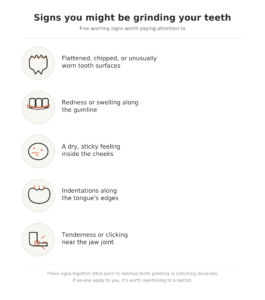
Because these symptoms build up gradually, patients rarely notice them until a routine cleaning. During an exam, your dentist may flag :- Flattened, chipped, or unusually worn tooth surfaces
- Redness or swelling along the gumline
- A dry, sticky feeling inside the cheeks

- Indentations along the tongue’s edges
- Tenderness or clicking near the jaw joint
Why This Matters Beyond Your Smile
Sleep apnea isn’t just a dental issue. Left unmanaged, it’s linked to elevated risks of high blood pressure, heart disease, and daytime fatigue that affects everything from mood to concentration. Your mouth simply happens to be one of the earliest, most visible places these effects show up. That’s exactly why the relationship between sleep apnea and teeth makes routine dental visits such a valuable, low-effort checkpoint for catching a much bigger health issue early.What You Can Do About It
The link between sleep apnea and teeth doesn’t have to be a one-way street. Here’s where to start:- Bring up your symptoms. If you wake up with a sore jaw, notice snoring, or feel unusually tired despite a full night’s sleep, mention it at your next dental visit.
- Ask about a custom night guard. For grinding related to airway issues, a properly fitted night guard can protect your enamel while you pursue a broader diagnosis.
- Explore oral appliance therapy. Dentists trained in sleep medicine can fit custom devices that gently reposition your jaw or tongue to help keep your airway open through the night.
- Get evaluated by a sleep specialist. A formal sleep study is the only way to confirm an OSA diagnosis and determine whether CPAP therapy or another treatment path is right for you.
Why Choose VIN SMILES Advanced Dentistry
- At VIN SMILES Advanced Dentistry, we treat the relationship between sleep apnea and teeth as part of your whole-body health, not just your smile in isolation. Here’s what sets us apart:
- Trained Eyes for the Full Picture: Our team knows how to spot the early oral signs of conditions like sleep apnea, not just cavities and stains.
- Honest, Evidence-Based Guidance: We’ll walk you through what we see and why it matters, connecting you with the right specialists when needed.
- Custom Oral Appliances: From night guards to sleep-specific oral devices, we create solutions built around your exact bite and airway needs.
- Comprehensive, Collaborative Care: We work alongside sleep physicians and ENT specialists so your treatment plan addresses the full problem, not just the symptoms in your mouth.
- A Comfortable, Judgment-Free Environment: Whether it’s your first conversation about snoring or a follow-up on jaw pain, our clinic is a relaxed place to ask questions.
- If your teeth have been showing signs of nighttime stress, don’t wait for it to get worse. The connection between sleep apnea and teeth is well worth a conversation. Book a consultation with VIN SMILES Advanced Dentistry today and let our sleep dentistry team help you get to the root of it.