 INTRODUCTION: That One Bite That Doesn’t Feel Right
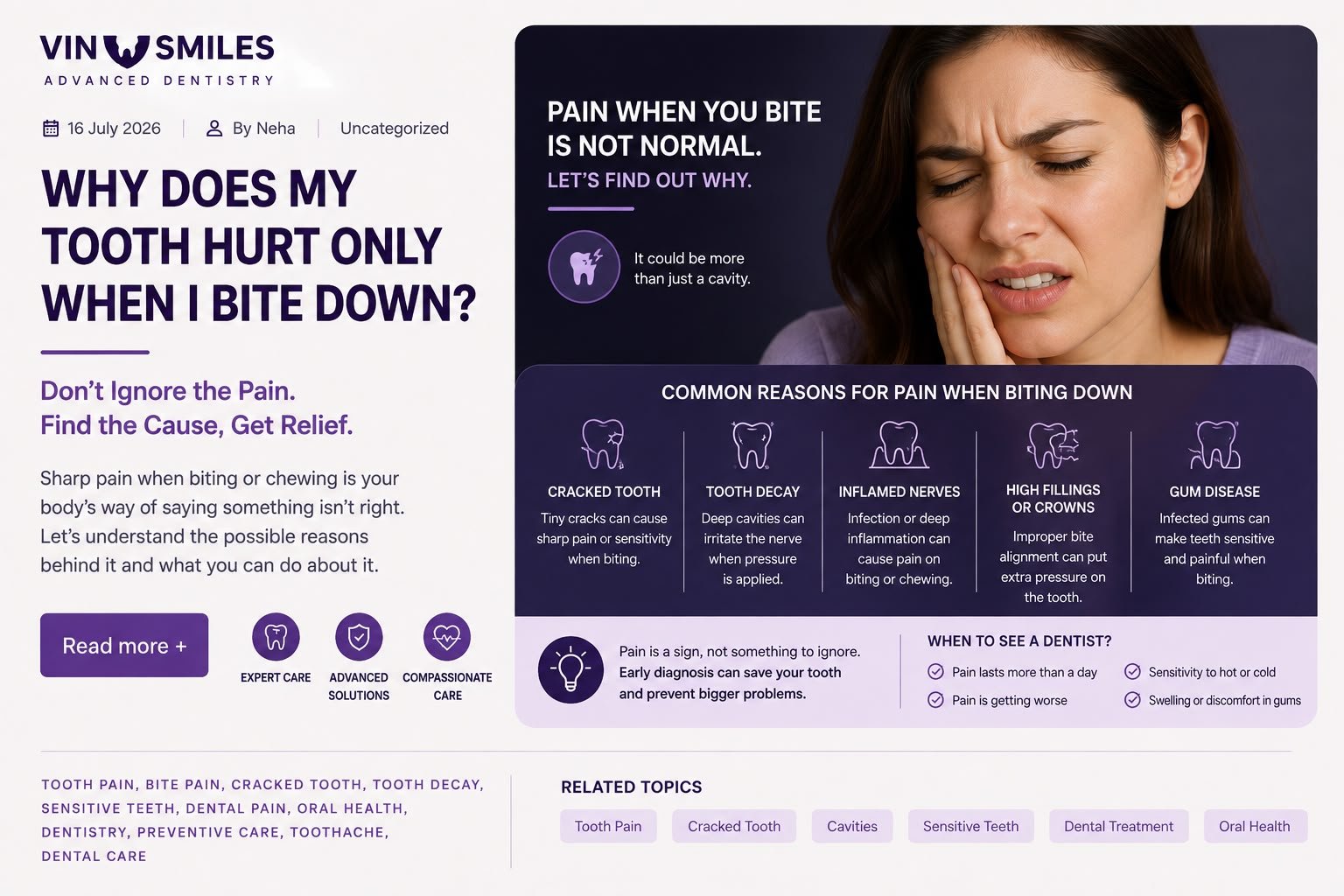
If your tooth hurts when biting down but feels completely fine the rest of the time, you’re not imagining things. This specific pattern of pain, sharp, localized, and triggered only by pressure, is one of the more distinctive complaints dentists hear. It’s also one of the easiest to dismiss, since the discomfort often vanishes the moment you stop chewing.At VIN SMILES Advanced Dentistry, this is a symptom we take seriously. It rarely resolves on its own, and waiting it out usually means the underlying problem gets worse, not better. Let’s walk through what’s likely going on, and why a quick exam can save you from a much bigger issue later.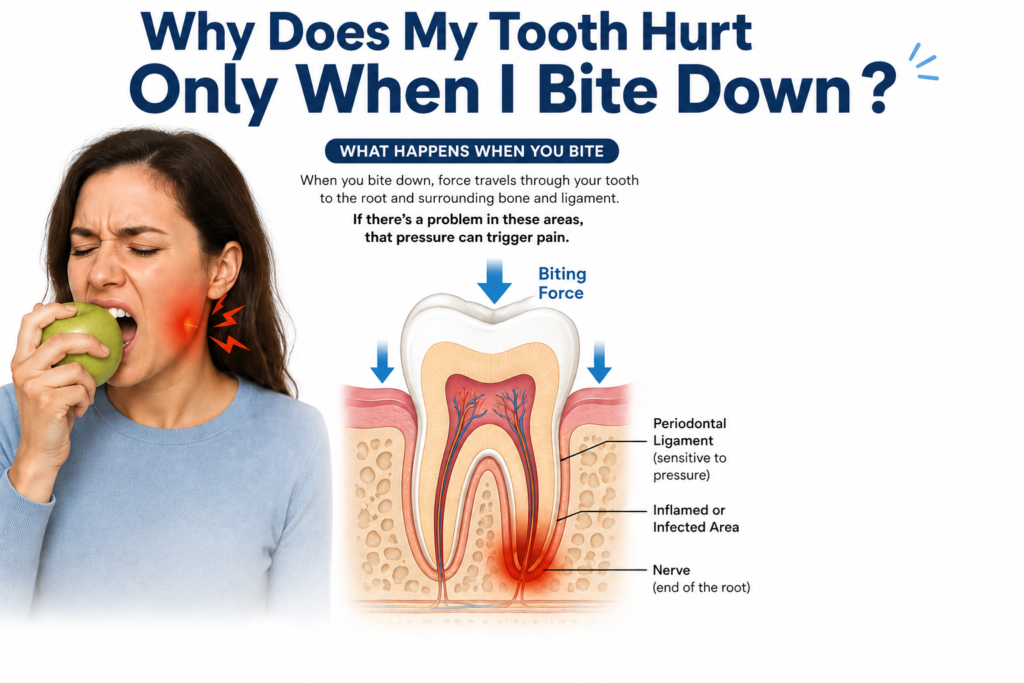 INTRODUCTION: That One Bite That Doesn’t Feel Right
The Most Common Reason Your Tooth Hurts When Biting Down
For most patients, a tooth that hurts when biting down points to a hidden crack in the tooth. Dentists call this cracked tooth syndrome, and it’s notoriously tricky to catch. One clinical resource note that up to 75% of adults have at least one back tooth with a visible crack, and nearly half of those cracked teeth become symptomatic over time.Here’s why it hurts the way it does: when you bite down, the two sides of the crack shift slightly against each other. That tiny movement irritates the nerve inside the tooth, producing a sharp jolt of pain. Release the bite, and the movement stops, so the pain often disappears just as fast as it arrived.Cracks commonly form from:
- Chewing ice, hard candy, or un popped popcorn kernels
- Grinding or clenching your teeth at night
- An old filling that has weakened the surrounding tooth structure
- A blow to the mouth from sports or an accident
OTHER REASONS YOUR TOOTH HURTS WHEN BITING DOWN
A Filling or Crown Sitting Too High
 uneven force can cause soreness that’s often mistaken for a deeper problem, but is usually fixed with a quick adjustment.
Tooth Decay Reaching the Inner Layers
An Abscess or Infection
Sinus Pressure
Gum Recession and Exposed Roots
WHY THIS KIND OF PAIN IS SO EASY TO IGNORE
When a tooth hurts when biting down but feels fine otherwise, the discomfort is brief and only happens under specific conditions. Many people assume it will resolve on its own. Unfortunately, cracks don’t heal, decay doesn’t reverse, and infections don’t clear up without treatment.The pain may even become less frequent for a while, which can feel like improvement. In reality, this often means the crack has deepened or the nerve has begun to die, both of which make treatment more complex down the line.WHEN TO SEE A DENTIST
Book an appointment if you notice:- Sharp pain specifically when chewing or biting on one tooth
- Pain that lingers after eating something cold or sweet
- Visible cracks, chips, or a loose filling
How Dentists Diagnose a Tooth That Hurts When Biting Down
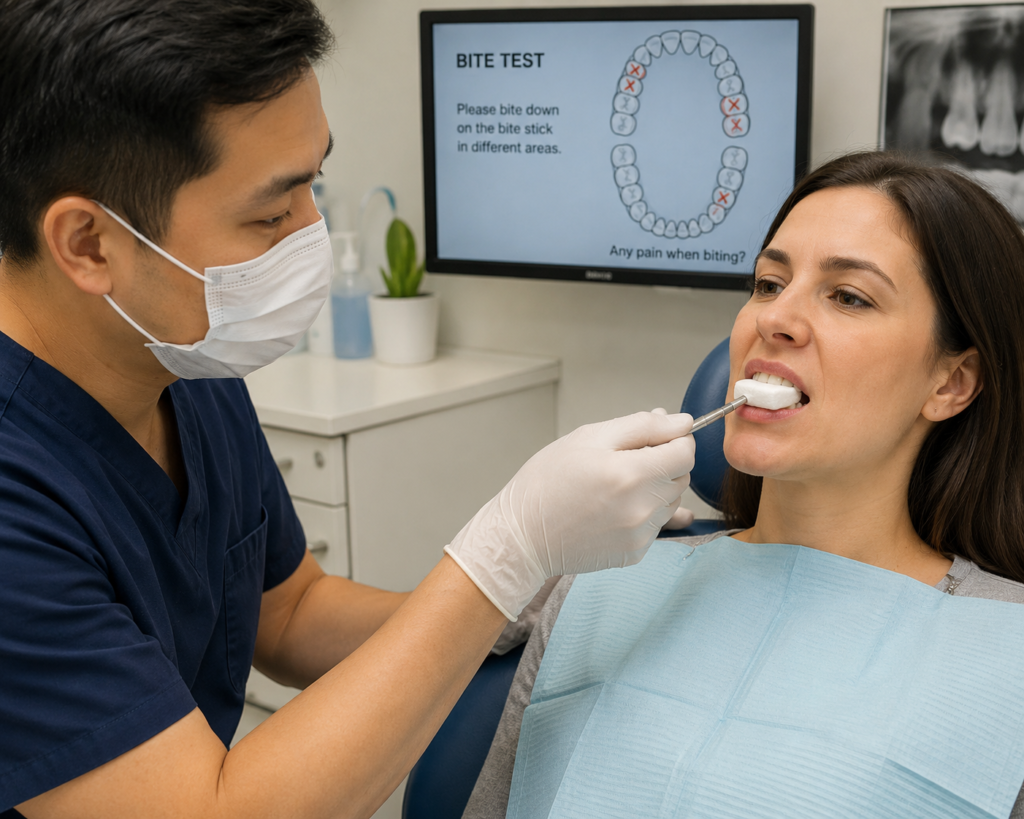
Because a cracked tooth often doesn’t show up clearly on a standard X-ray, diagnosis usually involves more than one method. According to Delta Dental’s overview of cracked tooth syndrome, dentists frequently rule out other causes like abscesses, sinus issues, and bruxism before confirming a crack. During your exam, you can expect:- A bite test, where you bite down on a small stick or cotton roll to help pinpoint the exact tooth
- A visual and tactile exam checking for visible fracture lines
- Transillumination, where a bright light is passed through the tooth to reveal hidden cracks
- Dye staining to highlight fracture lines that aren’t visible to the naked eye
- X-rays or a 3D scan to rule out decay, infection, or bone involvement
- Pain that’s gotten more frequent or intense over the past few days
TREATMENT OPTIONSTreatment depends entirely on the cause and severity:
- Minor high spots: A simple bite adjustment can resolve the issue in one visit
- Shallow cracks: A crown can protect the tooth from further damage before the crack progresses
- Deep cracks reaching the nerve: Root canal treatment is usually needed first, followed by a crown
- Decay: A filling or, in advanced cases, a root canal
- Infection: Antibiotics alongside root canal therapy or extraction, depending on severity
- Exposed roots: Desensitizing treatments or a gum graft in more significant cases
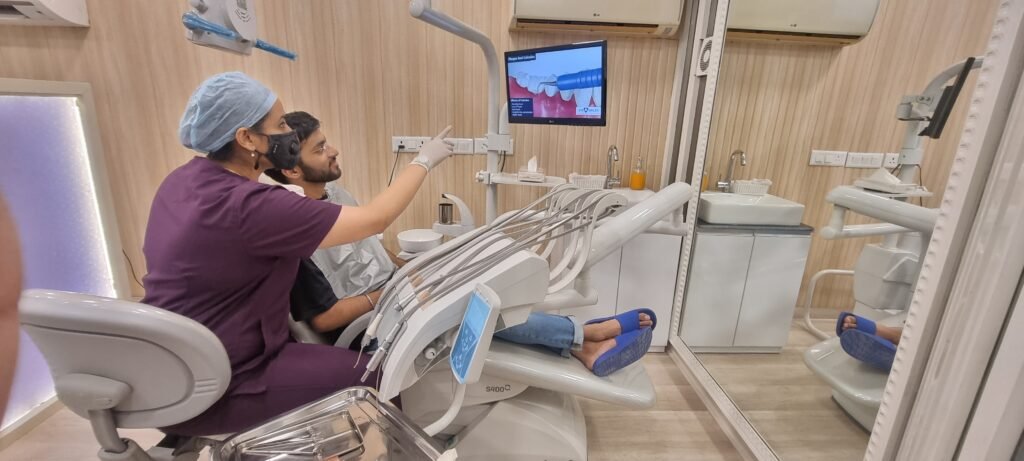
Why Choose VIN SMILES Advanced DentistryPain that comes and goes can be genuinely confusing to live with, and we understand why patients sometimes wait to get a tooth that hurts when biting down checked out. At VIN SMILES Advanced Dentistry, our approach is built around finding the real cause quickly, not just masking the symptom.
- Advanced Diagnostic Tools: From transillumination to digital imaging, we use methods designed specifically to catch cracks and issues that don’t show up on a standard X-ray.
- Same-Concern, Same-Visit Answers: We prioritize getting you a clear diagnosis and treatment plan without unnecessary back-and-forth appointments.
- Comfort-Focused Care: We know dental pain is stressful, so we prioritize gentle, judgment-free visits from the moment you walk in.
- Full Range of Treatments: Whether it’s a simple bite adjustment or a root canal and crown, our team handles the entire treatment journey in-house.
- Honest, No-Pressure Guidance: We’ll explain exactly what we find and what your realistic options are, so you can make an informed decision about your tooth.
Frequently Asked QuestionsCan a cracked tooth heal on its own? No. Once a tooth cracks, it cannot repair itself. Treatment is the only way to stop the crack from progressing further.Is it always a dental emergency if my tooth hurts when biting down? Not always, but it should never be ignored. If the pain is accompanied by swelling, fever, or spreads to your jaw, treat it as urgent and seek care right away.Why doesn’t the pain show up on an X-ray? Many cracks are too fine or positioned in a way that standard X-rays can’t capture. Dentists often rely on additional tools like bite tests and transillumination for an accurate diagnosis.What happens if I ignore the pain? The crack or underlying issue typically worsens over time, increasing the risk of infection, nerve damage, or eventual tooth loss.