
Call : +91 96549 88858

Vinsmiles Advanced Dentistry™

  • Home
  • Our Clinic
  • Treatments
    • Dental Impants
    • Prosthodontics
    • Conservative Dentistry
    • Endodontics
    • Periodontics
    • Oral and Maxillofacial Surgery
    • Orthodontics
    • Smile Designing
    • Full Mouth Rehabilitation
    • Pedodontics
  • Meet our Team
  • Contact Us
  • Blogs
  • Testimonials
Make an Appointment
  • Home
  • Blogs
  • Dental Education
  • How Diabetes Affects Your Teeth & Gums

How Diabetes Affects Your Teeth & Gums

How Diabetes Affects Your Teeth & Gums

by Neha / Wednesday, 22 April 2026 / Published in Dental Education
 

 How Diabetes Affects Your Teeth & Gums

Diabetes is often associated with blood sugar control, diet restrictions, and lifestyle changes. However, one important aspect that many people overlook is its impact on oral health.At VIN SMILES Advanced Dentistry, we regularly see patients across Delhi dealing with dental complications that are directly linked to diabetes. The truth is—your mouth and your body are deeply connected, and ignoring oral health can make diabetes management even more difficult.If you have diabetes or care for someone who does, this guide will help you understand the risks and how to protect your smile. The Science Behind Diabetes & Oral HealthDiabetes affects the body’s ability to process sugar effectively. When blood sugar levels remain high over time, it weakens the immune system and reduces the body’s ability to fight infections.This is where oral health comes in.Your mouth naturally contains bacteria. In a healthy individual, these bacteria are controlled by saliva and good oral hygiene. However, in diabetic patients:
  • Elevated glucose levels in saliva encourage bacterial growth
  • Reduced immunity makes it harder to fight infections
  • Inflammation becomes more severe and persistent
This significantly increases the risk of developing Gum Disease, a serious condition that affects the gums and the bone supporting your teeth.  Common Dental Problems in People with DiabetesUnderstanding the warning signs early can help prevent long-term damage. 
  1. Gum Disease (Gingivitis & Periodontitis)
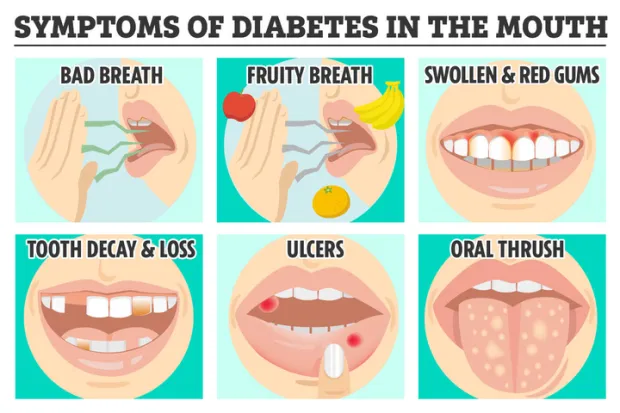
Gum disease is one of the most common complications seen in diabetic patients.It starts as gingivitis (mild inflammation) and can progress to periodontitis, which can damage the bone and lead to tooth loss.Symptoms to watch for:
  • Bleeding while brushing or flossing
  • Red, swollen, or tender gums
  • Persistent bad breath
  • Gum recession (teeth appearing longer)
  • Loose or shifting teeth
What makes this more concerning is that gum disease can also worsen blood sugar levels, making diabetes harder to control. 
  1. Dry Mouth (Xerostomia)
Many people with diabetes experience reduced saliva flow, leading to dry mouth.Saliva plays a crucial role in:
  • Washing away food particles
  • Neutralizing harmful acids
  • Protecting teeth from decay
When saliva levels drop, it increases the risk of:
  • Cavities
  • Mouth infections
  • Difficulty chewing or swallowing
  • Burning sensation in the mouth
 
  1. Slow Healing After Dental Procedures
If you have diabetes, your body’s healing response may be slower than usual.This becomes important after procedures like:
  • Tooth extractions
  • Dental implants
  • Gum treatments
Delayed healing can increase the chances of infection, which is why proper planning and post-treatment care are essential. 
  1. Increased Risk of Oral Infections
People with uncontrolled diabetes are more prone to infections such as oral thrush—a fungal infection that appears as white patches in the mouth.This is especially common in patients who:
  • Wear dentures
  • Have high blood sugar levels
  • Use certain medications
 
  1. Burning Mouth Syndrome & Taste Changes
Some diabetic patients report a burning sensation in the mouth or altered taste perception. While not as common, these symptoms can affect quality of life and eating habits.  The Two-Way Relationship: Why It MattersOne of the most important things to understand is that diabetes and oral health influence each other.Diabetes → Poor Oral Health High blood sugar weakens immunity and increases infection risk.Poor Oral Health → Worsening Diabetes Gum infections cause inflammation, which can increase blood sugar levels.This creates a cycle that can be difficult to break without proper care.  How to Protect Your Oral Health if You Have DiabetesThe good news is that with the right habits and professional care, you can significantly reduce your risk of dental complications.  Maintain Good Blood Sugar ControlKeeping your blood sugar levels stable is the foundation of both overall and oral health.Well-controlled diabetes:
  • Reduces inflammation
  • Improves healing
  • Lowers the risk of gum disease
  Follow a Strong Oral Hygiene RoutineConsistency is key.Daily habits to follow:
  • Brush your teeth at least twice a day using a soft-bristled toothbrush
  • Floss daily to remove plaque between teeth
  • Use an antibacterial mouthwash if recommended
Good oral hygiene helps keep bacterial growth under control.  Visit Your Dentist RegularlyRoutine dental check-ups are essential—especially for diabetic patients.If you’re based in Delhi, regular visits to a trusted dental clinic can help:
  • Detect problems early
  • Prevent complications
  • Maintain long-term oral health
Professional cleanings remove plaque and tartar that cannot be eliminated by brushing alone.  Stay HydratedDrinking plenty of water helps:
  • Combat dry mouth
  • Maintain saliva flow
  • Wash away food particles
You can also consider sugar-free chewing gum to stimulate saliva production.  Avoid Smoking & TobaccoSmoking significantly increases the risk of gum disease and slows healing.When combined with diabetes, the risk becomes even higher.  Inform Your Dentist About Your ConditionAlways keep your dentist informed about:
  • Your diabetes status
  • Medications you are taking
  • Recent blood sugar levels
This helps in planning safe and effective treatments.  When Should You See a Dentist Immediately?Early intervention can make a big difference.Seek dental care if you notice:
  • Bleeding gums that don’t improve
  • Swelling or pain in the gums
  • Loose teeth
  • Persistent bad breath
  • White patches or sores in the mouth
Ignoring these symptoms can lead to serious complications.  Why Specialized Dental Care MattersManaging oral health with diabetes requires a more personalized approach.At VIN SMILES Advanced Dentistry, we focus on:
  • Gentle, painless procedures
  • Faster recovery protocols
  • Customized treatment plans for medically compromised patients

Our goal is to make dental care stress-free while ensuring the highest level of safety and comfort.   Final ThoughtsDiabetes and oral health are closely linked—but with awareness and the right care, you can stay in control.Taking small steps like maintaining oral hygiene, managing blood sugar, and scheduling regular dental visits can go a long way in preserving your smile.Remember, a healthy mouth contributes to a healthier body.  Book Your Consultation TodayIf you or a loved one is living with diabetes and experiencing dental issues, don’t delay treatment.Early care can prevent long-term complications and help you maintain a confident, healthy smile.  
  • Tweet

What you can read next

What Does “Painless Dentistry” Really Mean?
How Painful Is Getting Braces?
Can Stress or Crying Cause Tooth Pain?
Address
S-303 (Basement), GK 2, New Delhi - 48

Services

  • Dental Implants
  • Prosthodontics
  • Conservative Dentistry
  • Endodontics
  • Periodontics
  • Oral & Maxillofacial Surgery
  • Orthodontics
  • Smile Designing 
  • Full Mouth Rehabilitation
  • Pedodontics

About Us

  • Our Clinic
  • Meet Our Team

Resources

  • Blog
  • Testimonials
  • Terms of Use
  • Privacy Policy
  • Contact Us
TOP